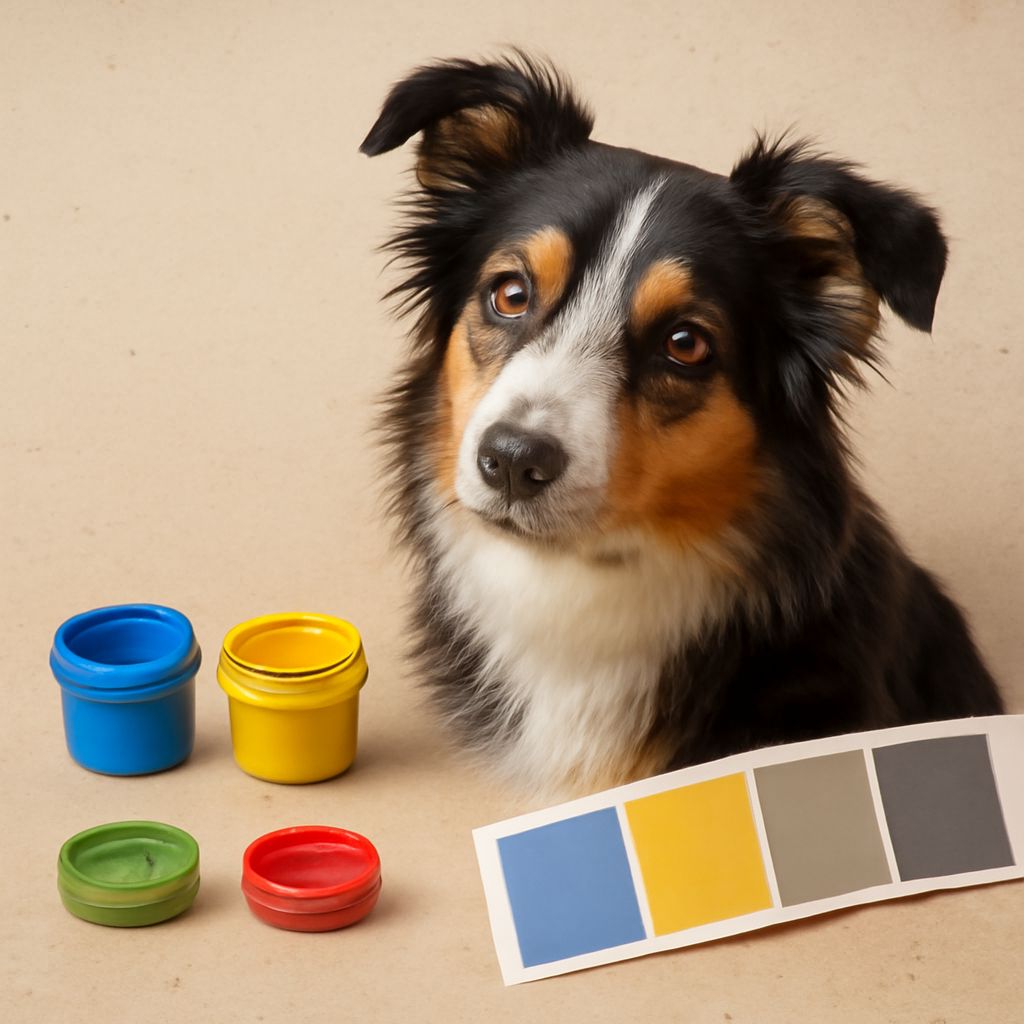

A blue or yellow toy may be easier for your dog to pick out against grass than a red one, especially when it also stands out in brightness. Understanding the colors dogs can see helps you choose a toy for the surface and light where you actually play.
Dogs distinguish some colors, but their range is different from yours. The colors a dog can see are only part of the picture: size, movement, scent and the contrast between an object and its surroundings all affect how easy it is to find.
What color can dogs see most easily?
What color can dogs see against a grassy background? Blue is often a practical choice. Dogs have color vision that is particularly suited to distinctions along a blue-to-yellow range. They have more difficulty telling apart colors that people commonly describe as red and green. That does not mean every red object disappears: it may still stand out because it is lighter or darker than its background, moves, or has a recognizable shape.
What colors do dogs see? Blue and yellow are helpful starting points when choosing a toy, while red and green can be harder to distinguish from one another. What colors can dogs see? The answer includes differences in blue and yellow, along with light and dark, but no simple list tells you exactly how a particular scene looks to your dog.
The American College of Veterinary Ophthalmologists describes dogs as having two types of cone cells, with sensitivity in blue-violet and greenish-yellow ranges. These cells help the eye respond to different wavelengths of light. Most people have three types of cones, which support a wider range of color distinctions.
How a dog’s color vision differs from yours
When people talk about the dog color spectrum, they are describing the range of color differences dogs can detect, not a photograph of what a dog experiences. Two cone types give dogs a form of vision called dichromatic. A familiar comparison is a person with red-green color blindness, although that comparison cannot tell us whether the two experiences feel identical.
Researchers study how dogs see color by training them to choose between visual targets and then changing conditions such as brightness. In one experiment, dogs used color cues to distinguish targets even when brightness changed. That is evidence that color can guide a choice; it does not reveal the precise subjective appearance of those targets.
A chart of the colors visible to dogs can make the distinction easier to imagine, but treat its colors as an approximation. A screen, a camera and the model used to generate the image all affect the result. Your dog’s eyes also receive light directly from a real scene rather than from the particular display you are looking at.
Why the background matters
Imagine throwing a blue ball onto green grass. The ball may offer a useful color difference, making it easier to notice than a red ball in the same place. Now put that blue ball on a blue blanket: its color may blend with the surface, so a pale yellow toy could be easier to pick out. In each case, the relationship between the toy and its background matters more than an isolated label on the packaging.
Brightness matters too. A dark toy against a light floor may have a clear outline even if its color is difficult to distinguish from the floor. A pale toy on a pale rug can be less obvious despite being yellow. Patterns, shadows and long grass can break up the outline or hide part of the toy, reducing the advantage of its color.
If you are choosing between two toys, put them on the surface where your dog plays rather than comparing them in your hand. Look at each from the height and distance at which your dog will encounter it. The colors a dog sees will also depend on the available light. This cannot reproduce canine vision, but it helps you notice obstacles, shadows and whether an object blends into its surroundings by brightness.
What changes in dim light?
Lighting changes the information available to both you and your dog. Which colors dogs can distinguish may become less clear as the light fades. As a room gets darker, color differences become less useful, and the contrast in brightness between a toy and the floor may become more important. Dogs have adaptations that help them see in low light, including light-sensitive rod cells and a reflective layer behind the retina, but they still need some light to see.
A ball that is easy to locate in a sunny yard may be harder to find at dusk or in a shaded corner. Try the same toy in the actual lighting you use, and provide enough light for safe play. Indoors, a lamp can make an object and nearby furniture easier to navigate around; outside, avoid throwing a toy into an area where neither of you can see the ground clearly.
Color is one clue among several
Can dogs see in color? Yes, and they can use that information, but a toy’s color alone does not determine whether your dog will chase it or bring it back. A rolling ball provides movement; a textured toy may be familiar by touch; a well-used object has a scent. Interest, training and the surrounding distractions matter as well.
Understanding how dogs perceive color can help you adjust the visual part of a game. If your dog misses a stationary toy, move it gently, bring it closer or choose one that contrasts with the surface. Keep the toy’s size and material appropriate for your dog, and supervise play according to how your dog uses it.
If finding familiar objects becomes noticeably harder, or your dog bumps into furniture or hesitates in familiar places, discuss the change with your veterinarian. A change in vision or another health issue deserves attention rather than simply a new toy.
Choose for your usual play surface
To decide what colors dogs see well enough to use in play, begin with the setting. For green grass, try a blue toy that is large enough to sit above the blades; for a blue rug, try yellow with a clear brightness difference. Place it a few feet away in your usual light and watch whether your dog can locate it. If it blends in or disappears into shadows, change the color or brightness and try again.