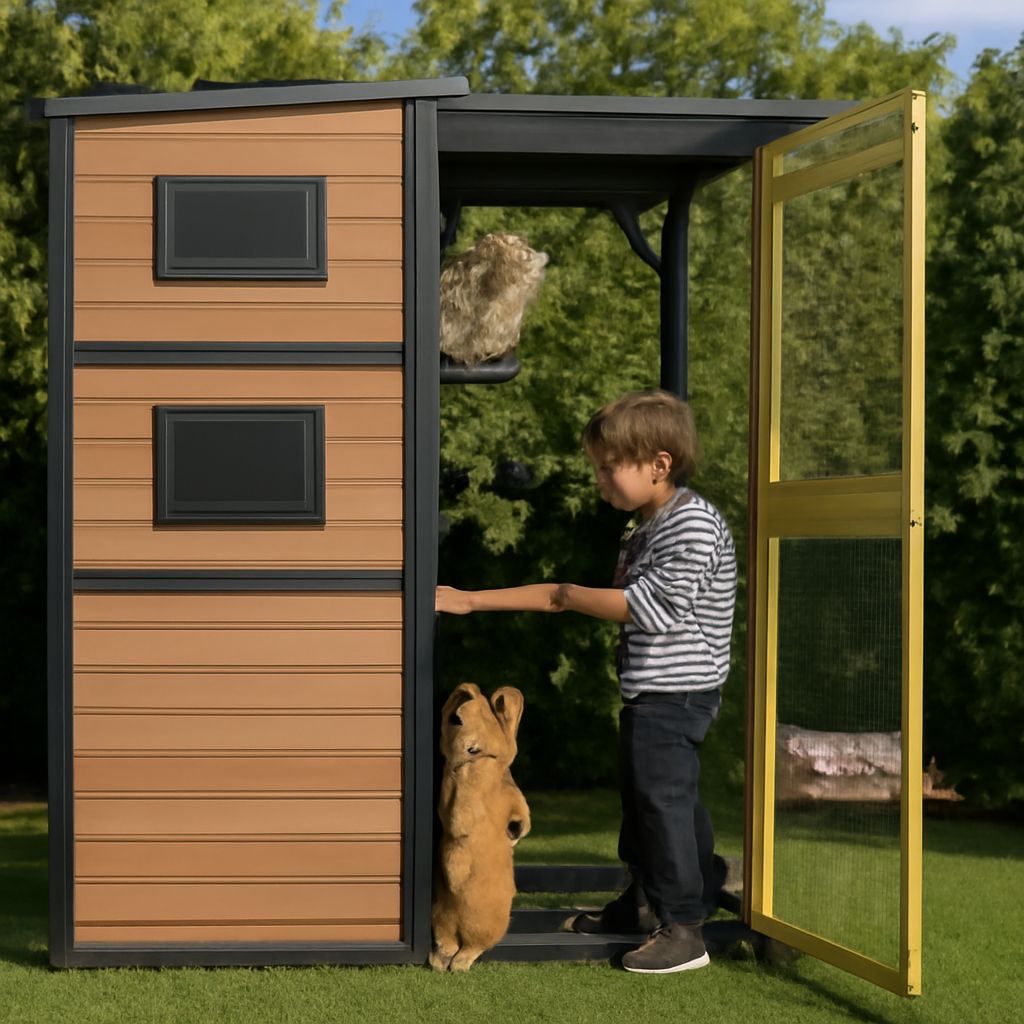

A well-planned outdoor enclosure gives your cat a place to watch birds, sniff the breeze, and stretch out in the sun while you stay nearby. An outside cat run can fit a small patio or a larger yard; the right choice depends on your access, the site, and the cat who will use it.
Start by picturing a normal visit. How will your cat enter? Where will you sit? Can you reach every corner if a toy, a frightened cat, or a fallen branch needs attention? Choose a space that is enjoyable and manageable.
Outdoor cat run placement and access
A run for your cat outdoors is easier to visit when it sits beside a door or window. A freestanding outdoor cat run can work farther into the yard, but you will need a secure way to carry your cat there and a place to enter without creating an escape route. Consider how you will bring in a carrier, clean the floor, and reach a cat resting on the highest shelf.
Look at the site at different times of day. An area that feels pleasant in the morning may be exposed to strong afternoon sun. Provide shade throughout a visit, drinking water, and a dry resting place; bring your cat inside when heat, cold, storms, or other conditions make the space uncomfortable. Keep the outdoor enclosure for your cat clear of toxic plants, lawn chemicals, standing water, and tools.
If you have a dog, position the outdoor run for your cat where the dog cannot crowd the mesh or startle its occupant. Give both animals room to settle, and supervise their interactions. A cat should be able to move away from the boundary and hide from view.
Build security into every opening
On an enclosure for cats outdoors, the roof matters as much as the walls. Cats climb, and predators may approach from above or from the ground. Choose sturdy framing and securely fastened, rigid wire mesh with openings too small for your cat to squeeze through. Avoid relying on insect screen: it is designed to keep insects out, not to withstand claws or a determined animal pushing against it.
Inspect the connection between the mesh and frame, including corners and the bottom edge. Anchor the structure to a sound surface according to the manufacturer’s directions. On soil, address the perimeter so an animal cannot easily dig underneath; a secured floor or properly installed buried barrier may suit the site. Remove sharp wire ends and cover exposed fasteners where paws could catch.
For a walk-in cat enclosure outside, a double-door entry creates a small buffer: close one door before opening the other. If space only permits one door, keep your cat away from it while you enter and leave. Use latches that close reliably and cannot be nudged open, and check them each time. No design removes every risk, so stay close enough to notice a problem and bring your cat indoors when needed.
Choose a layout that suits your home
A cat porch attached to a house can make access convenient. An enclosed porch for cats also lets you share the space, provided the existing walls, roof, and doors are secure. Check the original structure: a cat-friendly porch may need a purpose-built barrier in place of railing or ordinary screen.
A window-connected enclosure can work where a porch for your cat is impractical. Check that the window connection closes securely around the opening and that the unit and its supports are rated for the intended load. Keep a normal way to close and secure the window when the enclosure is not in use. If you rent or share a building, obtain any required permission before making changes.
A detached outdoor cat run gives you more freedom to position it, but every trip requires a secure transfer. Practice short carrier trips indoors first, and place the carrier inside before opening its door. A familiar blanket can make the first visit less alarming. Let your cat decide when to emerge.
Compare ready-made options
When browsing outdoor cat enclosures for sale, compare usable floor space and height with the actual dimensions of your site. Allow room for the door to swing, for you to clean, and for the cat to turn around and climb without crowding the entrance. A compact cat run outdoors may suit brief supervised visits; a larger one can offer separate resting, climbing, and hiding spots.
Read the specifications for frame and mesh materials, fasteners, anchoring, and replacement parts. A listing for a cat enclosure outdoor kit should identify the size of the mesh and explain how the panels join. Check the weight limits for shelves and whether the seller provides assembly instructions before ordering. For any cat enclosure outdoor system, confirm that your chosen ground or patio can support the anchors specified by the maker.
Compare the full cost of an outdoor cat enclosure with the advertised price. Delivery, a suitable base, extra shelves, and anchors can change the budget. Measure the route too: assembled panels must fit through the gate.
Furnish for curious paws
Add a stable low platform first, then offer higher shelves if your cat enjoys climbing. Arrange them with comfortable steps between levels and enough clearance for turning. Secure each shelf to the frame within its rated load. A covered bed or box gives a nervous visitor a retreat, while a scratcher and a few movable toys add variety. Skip loose strings and small detachable pieces that could be swallowed.
An outdoor cat enclosure becomes more inviting when it offers choices: sun and shade, a perch and a hiding place, a view and a quiet corner. Avoid placing a shelf where it gives a predator easy access through the mesh. Watch how your cat uses the space and move furnishings that block the doorway.
Make inspection part of the routine
Before each session, walk around the outside cat enclosure and test the door latch. Look for loose mesh, gaps at the ground, sharp edges, damage from weather, and signs that another animal has been digging or pressing against the walls. Check water and shade before bringing your cat out. Afterward, remove food scraps and bring toys inside if they could become damaged or attract wildlife.
Inspect the frame, anchors, and shelves of the outdoor run for cats regularly and after severe weather. Repair damaged parts before the next visit, following the manufacturer’s instructions. If you cannot restore a secure connection, keep the cat indoors until the part is replaced.
Ready to start? Measure one possible location today, note where the sun falls, and mark the door clearance. Those three details will make your first comparison of a cat enclosure outdoor kit much more practical.