
Ensuring our furry friends enjoy fresh and nutritious meals is a top priority for any pet owner. We all know that the best way to store dog food is essential for maintaining its quality and safety. By understanding how to store dog food correctly, we can prevent spoilage and ensure that every meal is as delicious and healthy as the last. Let’s explore some vital storage tips and techniques to keep your dog’s food in perfect condition.
Understanding the Importance of Proper Dog Food Storage
Proper dog food storage is crucial for a variety of reasons, including preserving freshness, maintaining nutritional value, and preventing contamination. When we store dog food improperly, exposure to air, moisture, and pests can degrade its quality. The best way to store dog food is by ensuring it’s kept in a cool, dry place, away from direct sunlight and potential contaminants.
Storing dog food correctly not only protects your investment but also guarantees that your pet receives the full benefit of the nutrients intended by the food’s manufacturer. The goal is to maintain the food’s integrity from the moment it leaves the store until it reaches your pet’s bowl.
Best Containers for Dog Food Storage
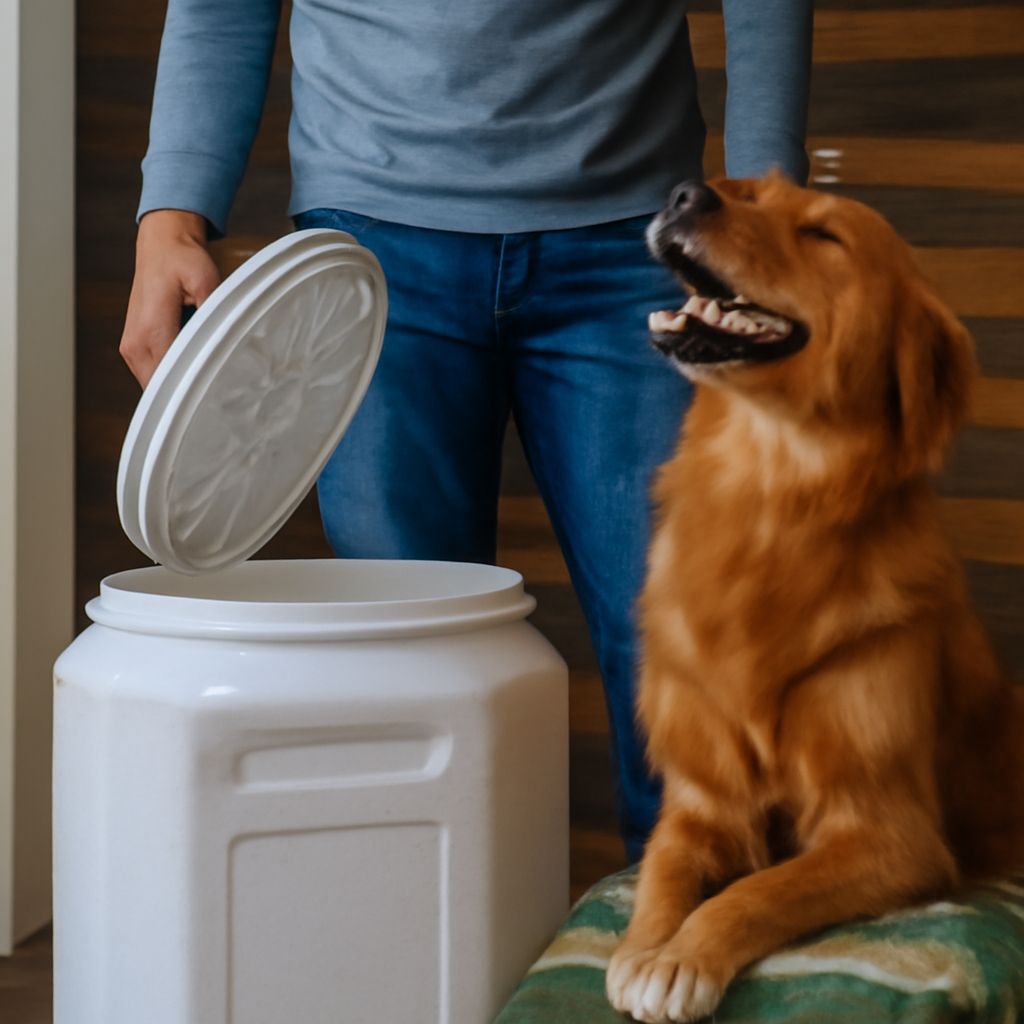
Choosing the right container is fundamental to dog food storage. Airtight containers are ideal as they prevent exposure to air and moisture, two primary factors that can lead to spoilage. We recommend using containers made from high-quality, food-grade plastic or stainless steel, as these materials are durable and easy to clean.
Another consideration when selecting a container is size. It’s best to choose a container that matches the size of the dog food bag, allowing you to store the entire bag inside without having to transfer the food. This practice helps maintain freshness and reduces the risk of contamination.
Tips on How to Store Dog Food Correctly
To store dog food effectively, keep it in a consistent, cool temperature environment. Avoid areas that experience temperature fluctuations, such as garages or sheds. These conditions can lead to condensation inside the container, potentially spoiling the food.
Always keep the food in its original bag if possible, as manufacturers design these bags to preserve freshness. Placing the entire bag inside an airtight container combines the benefits of both the bag and the container, offering optimal protection.
Additionally, make it a habit to check expiration dates and use older food first. Rotating stock ensures your dog always receives the freshest meals, reducing waste and maximizing quality.
Signs Your Dog Food is Not Stored Properly
There are several signs that dog food may not be stored correctly. If you notice a change in smell, color, or texture, these could be indicators of spoilage. Mold or pest infestations are clear signs that the storage environment is compromised.
We should always trust our senses; if the food seems off in any way, it’s better to err on the side of caution. Feeding your dog spoiled food can lead to health issues, so ensuring proper storage is not only beneficial but necessary for your pet’s well-being.
Frequently Asked Questions About Dog Food Storage
Can I store dog food in the refrigerator or freezer?
Refrigerating or freezing dog food is generally not recommended, as most dry dog foods are designed to be stored at room temperature. However, if done correctly for short periods, refrigeration can extend freshness.
Is it okay to transfer dog food to a different container?
While transferring to a different container is possible, it’s best to keep the food in its original packaging within an airtight container. This method ensures both the packaging and the container work together to preserve freshness.
How long can I store opened canned dog food?
Opened canned dog food should be covered and stored in the refrigerator. It’s best used within 5-7 days to maintain its quality and prevent spoilage.
Safety Recap: Using proper storage techniques is essential to ensure the freshness and safety of your dog’s food. Always employ airtight containers and store food in a consistent environment to prevent spoilage and protect your pet’s health.