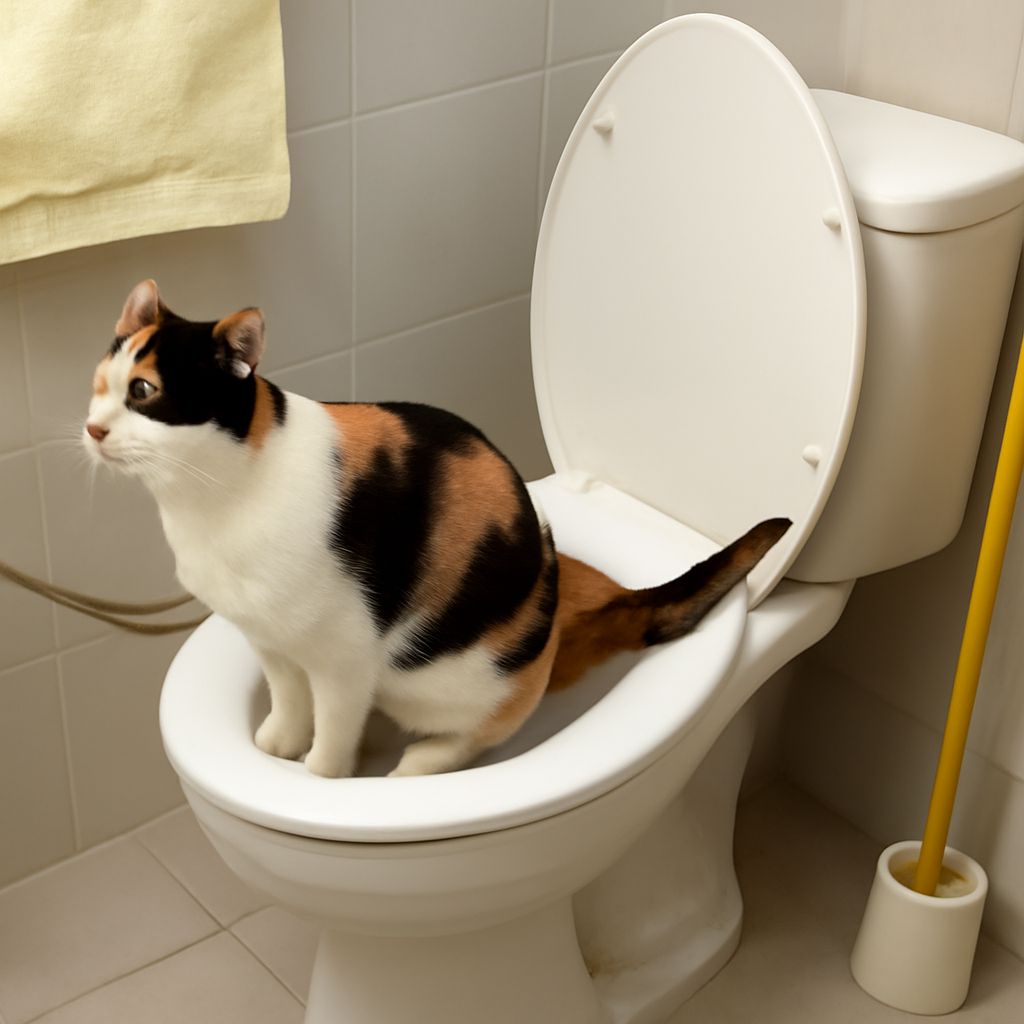

A cat using the toilet might mean less litter to scoop and less tracking across the floor. If you’re wondering how to teach your cat to use the toilet, the process gradually moves a familiar litter area toward the seat.
Learning how to train your cat to use the toilet also means watching for discomfort and knowing when to stop. Many cats are better served by a clean, accessible litter box, where they can dig and cover their waste.
Is toilet training a good fit for your cat?
Before deciding how to teach a cat to use the toilet, consider what the change asks of your pet. Balancing on a narrow seat above water is very different from standing in a roomy box. A slip or a startling flush can make the bathroom a place your cat avoids.
A kitten, senior cat, or cat with arthritis, limited mobility, balance problems, or a history of urinary or litter-box trouble is a poor candidate. A cat recovering from illness or already stressed by a move or another pet also needs a stable routine. Ask your veterinarian about your individual cat before beginning, especially if you are unsure whether jumping and balancing are comfortable.
Even a healthy, agile cat may prefer a box. Training a cat to use the toilet removes the chance to dig and cover in the usual way, and waste in the bowl can make changes in urine volume or stool harder to notice. You will also need to keep the bathroom door open, the seat down, and the lid up whenever your cat needs access.
How to train a cat to use a toilet, step by step
Toilet training for cats takes gradual changes and patient observation. Stay at each stage until your cat is relaxed and consistently using the setup. If your cat hesitates, return to the last comfortable stage rather than pushing forward.
- Start with a dependable box. Place a clean, roomy litter box near the bathroom, away from food and busy traffic. Keep using your cat’s familiar litter. Scoop daily, and watch for normal urination and bowel movements before changing anything.
- Move toward the toilet. Shift the box a little closer to the toilet at a time. If your cat stops using it or seems uneasy, move it back and allow more time. Leave a separate, accessible box elsewhere in the home as an alternative.
- Raise the box gradually. Place it on a broad, stable platform and increase the height in small increments until it is level with the seat. Make sure the route up and down is secure and that the box cannot tip. Never stack wobbly objects under it. If jumping is difficult, stop and return the box to floor level.
- Introduce a fitted training tray. Choose a tray designed to sit securely under the toilet seat and follow its instructions. Add a small amount of familiar litter to the tray. Keep the lid up and the room quiet. Let your cat investigate without being placed or held on the seat.
- Change the tray slowly. Some kits use inserts with progressively larger openings. Move to the next insert only when your cat is using the current one comfortably. Your cat must be able to stand securely. If balance looks awkward or your cat avoids the tray, go back a stage or return to the box.
- Observe the final transition. If your cat remains comfortable, follow the kit’s final step for removing the insert. Keep the alternative litter box available and continue watching your cat’s bathroom habits. Reward calm investigation or successful use with a small treat or praise; never punish an accident.
If you are considering how to teach a cat to use the toilet, plan for interruptions. A closed door, a guest who lowers the lid, or a bathroom repair can leave your cat without access.
What can go wrong?
When you train a cat to use a toilet, a wet seat or unstable insert can make the surface slippery. Check the seat and tray every day, and avoid toilet-cleaning products or automatic cleaners that could expose your cat to chemicals. Keep cleaning supplies out of reach. Dispose of litter according to local rules and the product label; do not assume that litter belongs in the plumbing.
Teaching cats to use the toilet can also make routine health monitoring harder. With a litter box, you can often notice smaller urine clumps, straining, diarrhea, or constipation as you scoop. If waste disappears into water, make a deliberate habit of observing your cat’s visits and contact your vet about changes.
Training your cat to use the toilet should stop if your pet repeatedly avoids the bathroom, cries, crouches anxiously, slips, or starts eliminating elsewhere. Restore a floor-level box with familiar litter in a quiet place. Clean accidents with an enzymatic pet cleaner so lingering odor is less likely to draw your cat back to that spot.
Make the litter box easier to live with
A good box setup can address much of the mess that sends people looking into cat toilet training. Choose a large box with enough room for your cat to turn around. A low entry helps cats with painful joints. Many cats prefer unscented litter; use the texture your own cat accepts.
Place boxes in quiet, accessible spots, away from food and water. International Cat Care suggests one box per cat plus one extra, in separate locations. Scoop at least daily and wash boxes regularly. A mat outside the entrance can catch some litter on the way out, while a high-sided box can contain scatter if your cat can comfortably enter it.
If you are still weighing how to train a cat to use a toilet, compare those small adjustments with the daily demands of keeping a human toilet accessible. Teaching your cat toilet habits may be less appealing once a clean box and mat solve the tracking problem. For more on box size, location, and cleaning, see International Cat Care’s kitten care guide.
If your cat starts going elsewhere
The most likely setback in teaching a cat to use the toilet is avoidance: you may find a puddle beside the toilet, notice your cat hovering and leaving, or see fewer normal bathroom visits. Stop the transition and put a clean box with familiar litter back at floor level. Arrange a veterinary check for a change in elimination, since pain or illness can contribute to accidents. If your cat repeatedly strains to urinate and produces little or no urine, seek emergency veterinary care immediately. Once health concerns are addressed, a comfortable box can remain the everyday solution.