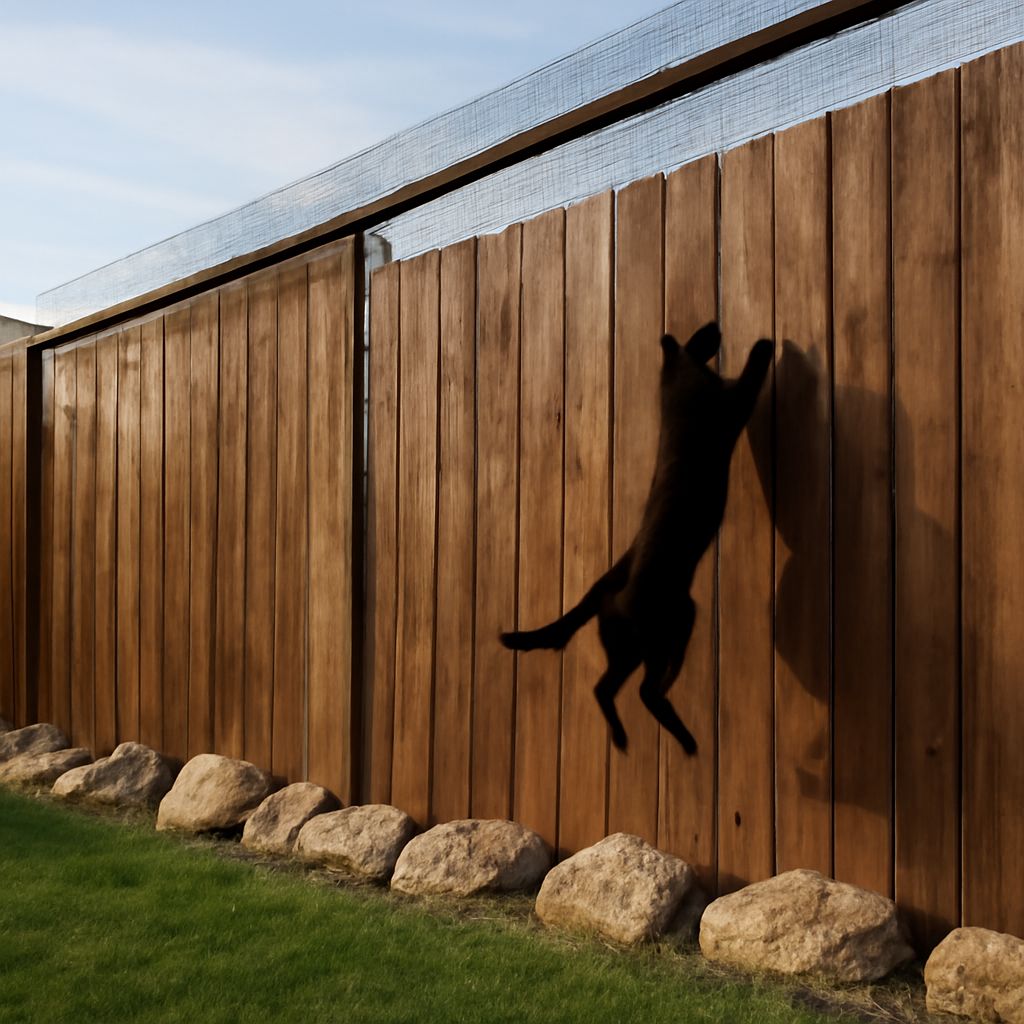

You want your cat to enjoy some fresh air without turning the backyard into a launchpad for the neighborhood. A fence topper for your cat can make the boundary harder to climb, but its usefulness depends on the entire route around the yard, from the ground to the highest branch.
Start with an honest tour of the space. Look for footholds, gaps, jumping points, and places where paws or collars could catch. Then compare additions that fit the existing structure and plan to stay outside with your pet while you learn how the setup works.
Cat Fence Topper Options: Compare the Designs
A cat fence topper changes what happens when a climber reaches the top of the fence. It still needs a sound base and careful attention at gates and corners. Consider how each design is supported, how you will inspect it, and whether the manufacturer offers suitable fittings for your fence material.
An inward-angled barrier projects toward the yard, making the upper edge harder to get past. Check the angle and support spacing specified for the product, especially where a straight run meets a corner. Look for firm connections and a surface that will not leave sharp edges or loose strands within reach.
A rotating rail turns when an animal tries to grip it. A roller can be a good choice where the underlying fence is solid and the top is reasonably level. Ask how it performs around posts, gates, and changes in height. Leaves, rust, or a bent bracket can interfere with movement, so make sure each section remains accessible for cleaning and inspection.
A mesh overhang may cover an uneven run, but its material and installation deserve close attention. Avoid openings or loose loops that could trap a head, leg, or collar. Choose a purpose-made system and follow its instructions for tension and supports; if a section sags or tears, keep your pet away until it is repaired.
The term cat proof fence topper describes a product category, not a promise that every yard will hold every animal. A determined climber may find a route around a short run, over a gate, or from a nearby tree. Cats Protection recommends ensuring that fence-top additions cannot ensnare or injure a cat.
Walk the Boundary Before You Buy
Begin at a gate and work all the way around. Inspect the base for openings under panels, loose boards, erosion, and gaps where the fence meets a wall. Check both sides where you can do so safely. A small opening hidden behind a planter can be easy to miss from the patio.
Next, look up. A cat fence may be tall, but a stacked woodpile, shed roof, air-conditioning unit, or low branch can shorten the effective climbing route. Imagine your pet moving from one surface to the next. Move portable objects away from the boundary and consider whether fixed structures or branches need a different solution.
A fence topper for cats should extend consistently across the usable boundary, including awkward transitions. Measure each run and note post spacing, corners, slopes, and gate widths. Photograph connections to the house and any shared walls. Those details help a supplier or installer identify compatible fittings and spots that need a custom plan.
Watch for hazards as carefully as escape routes. Protruding screws, sharp cut ends, broken wire, and narrow V-shaped gaps can injure an animal. A product that appears sturdy from a distance may have a loose edge at paw height. If you cannot close a hazardous gap safely, ask a qualified installer for a suitable repair before allowing access.
Check Permission and Installation Details
Before ordering a topper for a cat’s fence, check local fence-height rules, property boundaries, and any homeowners association requirements. Rules may count an extension as part of the overall height or limit where it can project. If the fence is shared, discuss the proposed work with the neighbor and confirm who may authorize changes. A landlord’s permission may be needed for a rental.
Inspect the existing posts and panels for rot, corrosion, movement, and damage. An addition places extra demands on its supports, particularly in wind. If the fence wobbles or its condition is uncertain, have a fencing professional assess it before adding hardware. Ask the installer how the system attaches, how gates will open, and who is responsible for repairs.
A cat fence topper needs a continuous plan at the gate as well as along the panels. Check that the latch closes reliably and that the moving gate does not leave a new opening at the hinge or top. Make sure people can enter and leave safely without holding the gate open while looking for an adventurous companion.
Ask for installation instructions and maintenance requirements before committing. A fence-top barrier designed to discourage cats may require particular brackets or clearances; substituting parts without checking compatibility can create gaps or unstable sections. Keep the instructions so you can identify components during future inspections. A topper on a cat’s fence should remain reachable for inspection without leaning on a weak panel.
Put Observation and Maintenance on the Calendar
A fence for cats is one part of the plan. That boundary also needs attention as the yard changes. Start with short, supervised visits and watch how your pet explores. You may notice a preferred climbing spot or a shortcut you had not considered. End the visit and address the issue if your pet reaches a risky edge or becomes caught; never leave an animal struggling in the barrier.
Inspect after strong wind, heavy snow, falling branches, or other events that could shift the structure. Check attachment points, mesh tension, moving rails, and gate latches; clear debris and look for fresh gaps at ground level. Also revisit the layout as plants grow or furniture moves. A new bench can become a very convenient staircase.
Before each yard visit, walk the boundary from your cat’s point of view: check the ground line, panel joints, corners, gate and latch, topper connections, nearby roofs, stored objects, and overhanging branches. Look for sharp edges and places a paw or collar could catch. Close or repair any problem first, then go outside together.