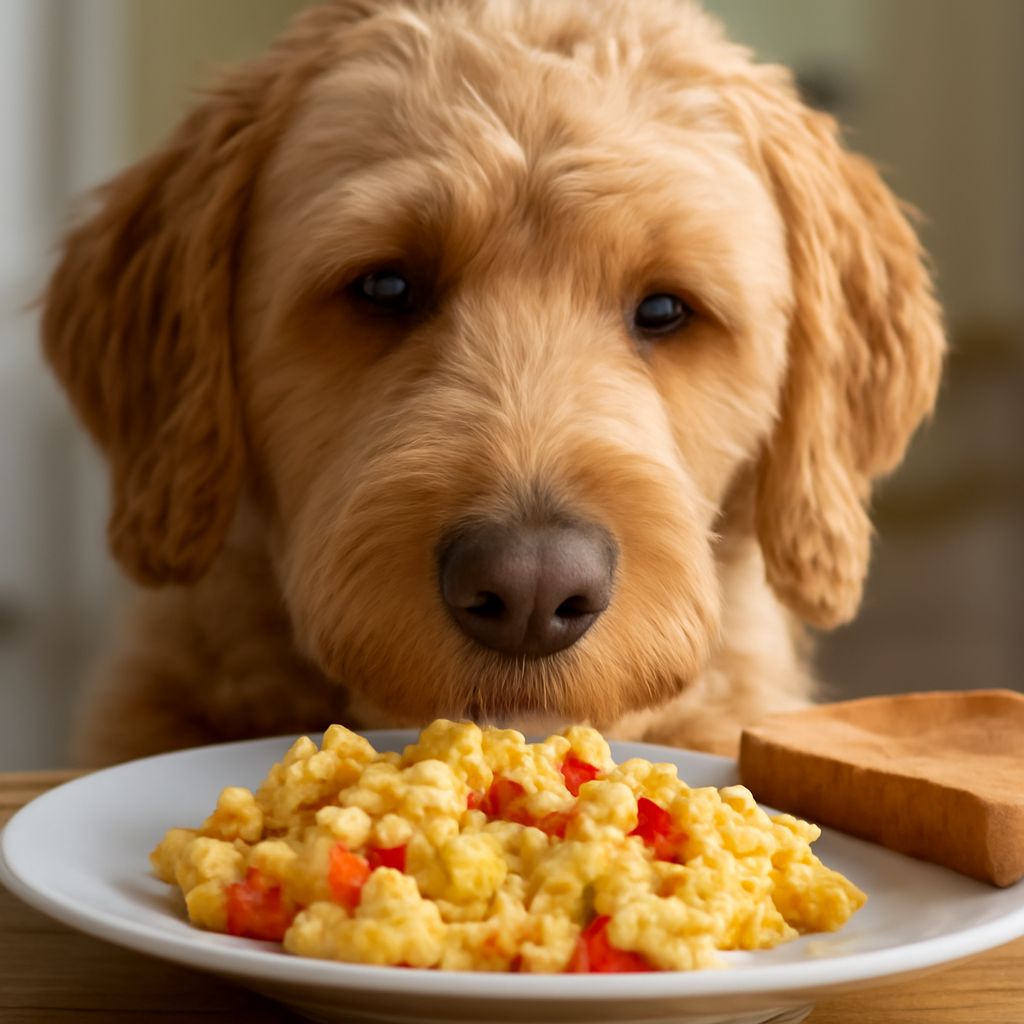

You’re making breakfast and your dog is watching the pan with professional concentration. Can your dog have some scrambled egg? Yes: for most dogs, a little fully cooked, plain egg can be an occasional treat. Set it aside before adding butter, salt, or anything else.
Whether egg is good for your dog depends on its overall diet and health, as well as how the egg is prepared. A diner-style breakfast with rich toppings is a different proposition from an unseasoned bite made for your dog.
Is Egg Good for Dogs? Consider the Whole Diet
Cooked egg can fit into many dogs’ diets as an occasional extra. It contains protein and fat, but a dog eating a complete, balanced diet doesn’t need an egg to make that meal complete. Egg is a good food for your dog only if it fits its individual needs and agrees with its stomach; a healthy reputation on a human menu doesn’t settle the question.
Is egg good for dogs with medical conditions? Ask your veterinarian before offering it if your dog has a prescribed diet, a history of pancreatitis, or another condition that affects what it can eat. Your vet can help you decide whether egg is a good choice for your dog and how to account for treats in its normal diet. There is no single portion that suits every dog.
Whether eggs are good for dogs also depends on how well each dog tolerates them. If you want your dog to have scrambled egg for the first time, introduce it gradually and pay attention to its response. Vomiting, diarrhea, itching, or other changes deserve a call to your vet, particularly if they persist or are severe. A dog with a known egg allergy should avoid it. Don’t use egg as a treatment for an upset stomach or substitute it for veterinary care.
A Simple Scramble for Your Dog
Can dogs have scrambled eggs? They can when the eggs are fully cooked and plain. Here’s a straightforward way to prepare them:
- Crack an egg into a clean bowl and beat it with a fork. Don’t add milk, salt, seasonings, or cheese.
- Cook it in a clean nonstick pan over gentle heat, stirring until the egg is firm throughout. Use no butter, oil, or cooking spray.
- Let it cool, then offer a little as an occasional extra suited to your dog’s needs. Refrigerate any remainder promptly.
The American Kennel Club recommends cooking eggs before serving them to dogs. The FDA’s egg safety guidance advises cooking until both white and yolk are firm. Use clean utensils and wash your hands after handling raw egg; a dedicated dog snack doesn’t need a side of kitchen germs.
Dogs can have plain scrambled eggs prepared this way while you season the larger batch for people. A separate pan lets you control what goes into your dog’s food. Can dogs have scrambled eggs from a seasoned pan? That preparation adds ingredients your dog does not need.
Fried Eggs and the Ingredients Around Them
Can dogs eat fried eggs? A fully cooked egg prepared without added fat or seasoning may be offered to many dogs, but the usual frying pan often contains butter, oil, or leftover bacon grease. Those additions make the dish richer and can cause digestive upset. Your dog may have scrambled eggs cooked without added fat instead, if egg suits its diet. A runny yolk also means the egg isn’t fully cooked.
Can a dog eat fried egg from your plate? First, check how it was cooked and what else was served with it. Onion and garlic, including powders, are toxic to dogs. Contact your veterinarian promptly if either was in the food; keep the ingredient list or recipe handy. The ASPCA’s food guidance explains the risks of these ingredients.
A dog can eat a fried egg only when you know it was cooked through and without additions, and when it fits that dog’s diet. If a fried egg was made with oil or butter, don’t intentionally share it. If your dog has already eaten it, call your vet for guidance when the amount was substantial, your dog has a relevant health condition, or signs of illness appear. Take note of the food and amount so you can give a useful history.
What About the Yolk?
Are egg yolks good for dogs? Cooked yolk is part of an egg many dogs can enjoy, but it contains fat and adds calories. For a dog on a fat-restricted diet or with a history of pancreatitis, ask the vet before offering it. The question isn’t whether yolk has appealing nutrients in isolation; it’s whether the food fits the dog in front of you.
A fully cooked egg yolk can be good for a dog as an occasional part of a suitable diet. Cook it until firm, including when preparing an egg sunny-side up for yourself. Cooked egg yolks can be a good choice for dogs when their individual diet permits, but the richness means more isn’t automatically better. If you’re unsure whether egg yolk is a good choice for your dog, your vet can assess its health and regular food.
Raw Egg Changes the Calculation
Can a dog eat egg raw? It’s better to cook it thoroughly. Dogs can eat a cooked egg as a treat when it suits their diet. Raw or undercooked eggs can carry Salmonella, which can affect animals and people. The FDA notes that pets can shed the bacteria in their feces even without appearing ill, creating another route of exposure in the household.
A dog can eat fully cooked eggs as an occasional extra; raw eggs bring a different risk. If your dog has eaten one by accident, clean the affected surfaces and wash your hands. Contact your vet if your dog becomes unwell or you need advice about its particular health risks. Watch for vomiting, diarrhea, lethargy, or a reduced appetite, and follow the vet’s guidance. Avoid giving more raw egg while waiting for advice.
Back at the breakfast pan, your dog can have scrambled egg as a treat when it is prepared simply. Choose the plain scramble if you want to share: cook it fully, keep the extras out, and let it cool. If the only egg available is runny or fried in butter, save it for your own plate and choose a dog-appropriate treat instead. Your dog may file a complaint; the choice is still yours.