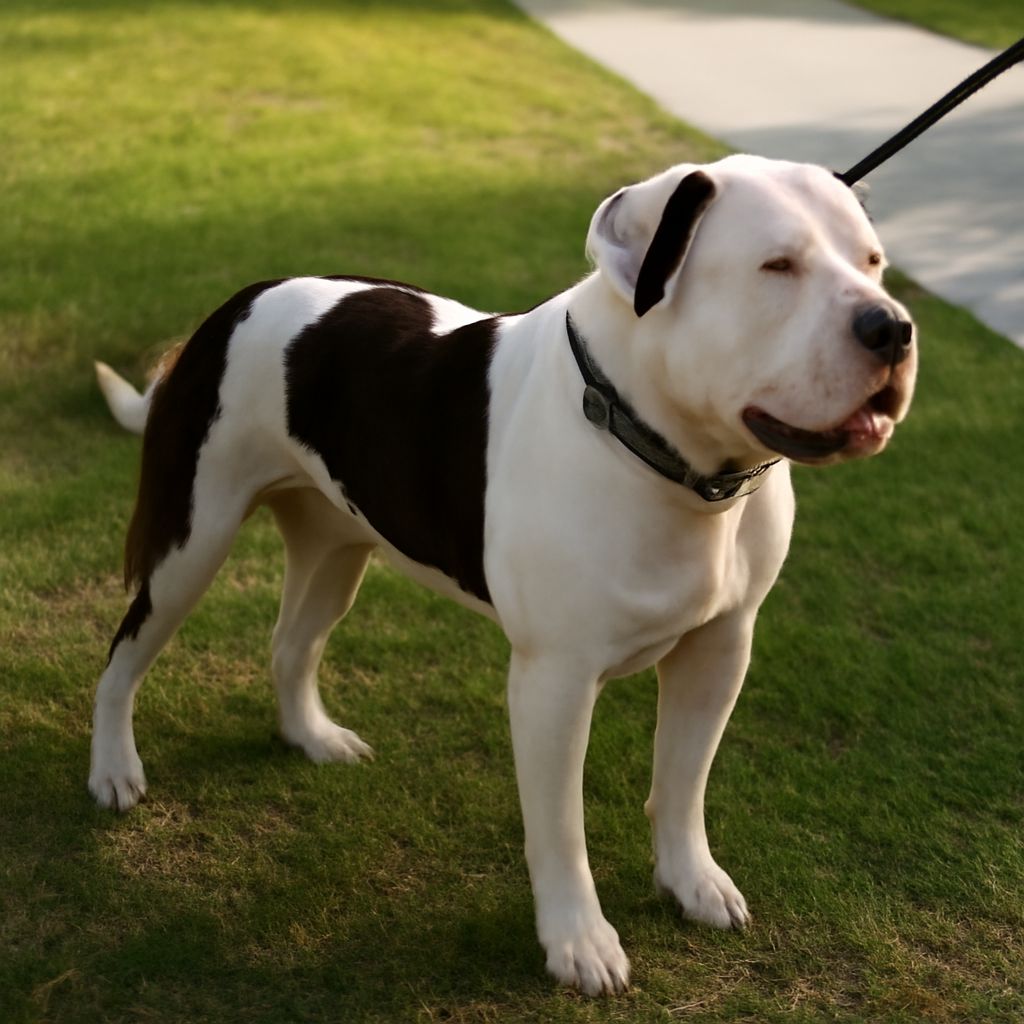

You want to choose a dog whose energy, handling needs, and temperament fit your household. When an American Bulldog is described as a Scott type, that label offers a clue about its background and appearance. To make a sound decision, you’ll also need to meet the individual dog and ask about its health and daily behavior.
American Bulldog Scott Type: Where the Name Comes From
Scott and Johnson refer to historically connected lines or types within the American Bulldog, not two separate breeds. The names are associated with Alan Scott and John D. Johnson, breeders involved in preserving and developing these working dogs. The United Kennel Club breed standard describes both styles within the breed’s history.
The Scott American Bulldog is often described as the standard or performance type. These dogs are commonly portrayed as leaner and more athletic in outline, with a longer muzzle and less heavy bone than the classic or bully style. An American Bulldog, Scott type, can still have a substantial build. The description reflects a tendency, not a checklist every dog must match.
The American Bulldog, Johnson type, is commonly called the classic or bully type. It is often described as broader and more heavily built, with a shorter muzzle and a more pronounced underbite. Dogs across these descriptions can vary considerably, and some have ancestry from both lines. The two names help you understand a conversation about the breed; they cannot settle a dog’s pedigree by sight.
Read the descriptions as tendencies
In historical accounts, American Bulldogs worked on farms and assisted with livestock. The Scott bulldog became associated with a more performance-oriented appearance, while Johnson-type dogs became known for a heavier look. Neither label is a reliable shortcut to how much exercise a particular dog needs or how it behaves with a visitor.
A dog may have the lean outline associated with a Scott-line American Bulldog and still prefer a moderate walk followed by a long nap. Another may look stockier and eagerly learn new games. Age, fitness, health, early experience, and training all influence the dog standing in front of you.
When people ask about American bulldog breeds, they may be surprised to learn that Scott and Johnson describe types within a single breed. But discussions of American Bulldog types are most helpful when they lead to specific questions: What does this dog enjoy? How does it respond to new people? Can it settle after activity? The answers are more useful for a family decision than an impression based on head shape.
Ask what the dog’s day looks like
Whether you meet a puppy through a breeder or an adult through a rescue, ask for examples rather than broad labels like “good family dog.” Find out how much exercise the dog currently gets, what games it enjoys, and how it behaves when a walk is delayed. Ask whether it has lived with children or other animals and how those interactions were supervised.
Meet the dog in a calm setting, then, if appropriate, see how it handles a short walk or a visitor. Look for a dog that can take in the surroundings and recover after a surprise. Ask the current caregiver to explain any behavior you don’t understand; one meeting is a small sample, and an unfamiliar setting can change how a dog acts.
If you have children, discuss their ages and habits honestly. A strong, excited dog can knock over a small child even during friendly play. Supervise interactions, give the dog an undisturbed place to rest, and teach children how to approach and leave it alone. Arrange introductions to resident pets with guidance from the rescue or a qualified trainer when needed.
Put health ahead of a label
Ask for veterinary records and a clear account of known conditions, medications, and previous injuries. Watch the dog walk and rise from rest. Ask whether it has had skin problems, limping, or difficulty breathing during ordinary activity. A shorter or longer face alone cannot tell you everything about breathing, so ask what happens on walks and in warm weather.
If you’re considering a puppy, request the parents’ actual health screening results, not just a promise that they are healthy. Ask your veterinarian to help interpret the records and suggest questions relevant to the individual family history. The American Kennel Club notes that the breed can develop inherited health conditions, as other breeds can.
A healthy weight matters for a muscular dog, too. Ask the veterinary team to demonstrate how to assess body condition and recommend a complete diet for the dog’s life stage. Measure meals, include treats in the daily allowance, and adjust with professional guidance if the dog’s condition changes.
Plan for a capable companion
The American Bulldog breed has a working background, so plan for regular exercise and rewarding activities suited to the dog’s age and health. Walks with time to sniff, food puzzles, and short training sessions can give a dog ways to use both body and mind. Build up activity gradually and provide water and rest, especially in warm conditions.
Teach leash manners, a reliable response to a name, and a comfortable settle using rewards. A securely fitted harness and a leash you can hold comfortably make outings easier to manage. If your dog pulls hard, reacts intensely to other dogs, or struggles to settle, seek help from a qualified reward-based trainer rather than relying on force.
Think through the practical details before adoption: who will walk the dog on busy days, where it can rest away from visitors, and how you’ll transport it to the veterinarian. These questions apply to both a Johnson-line American Bulldog and a Scott-line dog, regardless of which description sounds closer to your ideal.
Match the individual to your home
Picture the dog in your actual routine: a busy doorway, a neighborhood walk, and an evening when everyone needs quiet. Ask its caregiver what support it needs in each situation, then consider whether your household has the time and physical ability to provide it. A Scott-type American Bulldog may appeal to you, but the right match is the dog whose observed behavior, health needs, and activity level fit the life you can offer.