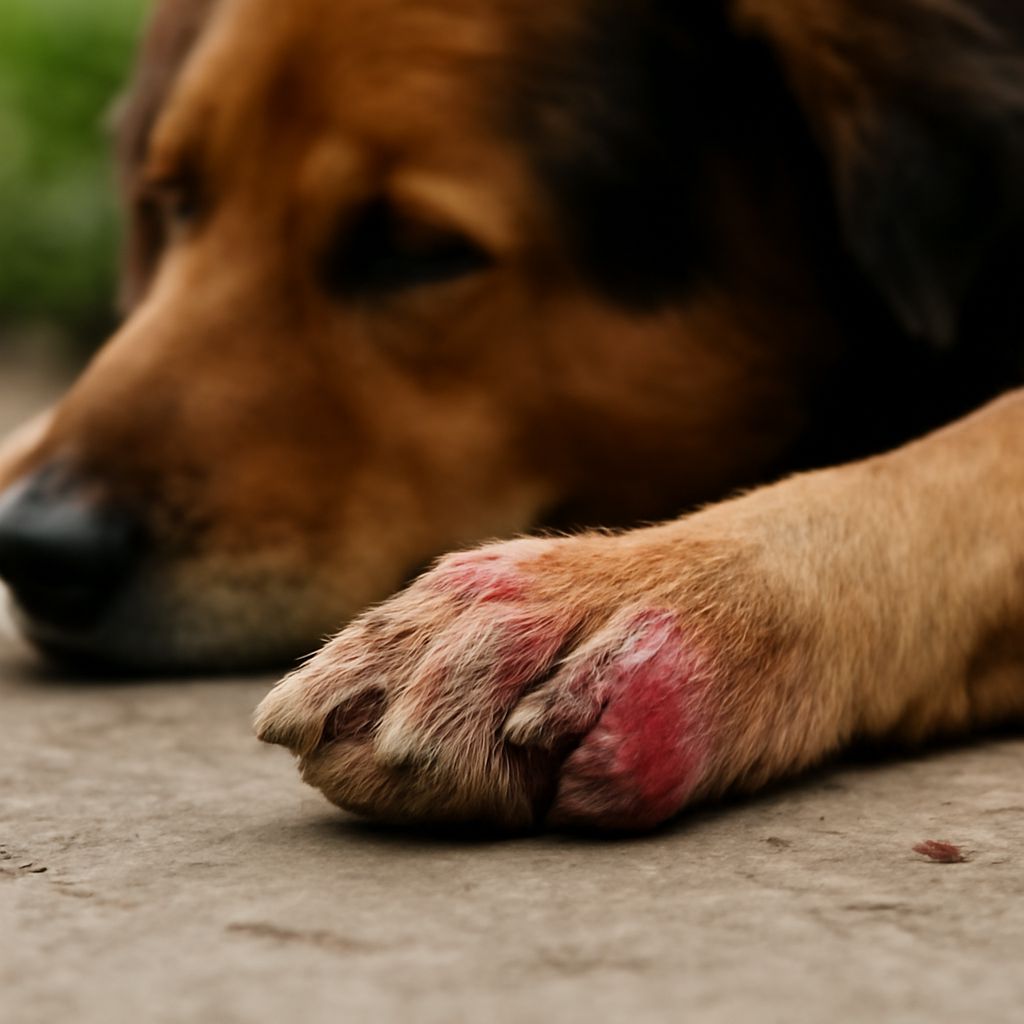

As pet owners, we all want our furry companions to be healthy and happy. However, sometimes we notice things that concern us, like when our dog’s paw is red between pads. This condition, often a sign of pododermatitis, can cause discomfort for our beloved pets. Understanding the causes, symptoms, and treatment of pododermatitis in dogs can help us ensure their paws remain in tip-top shape.
What is Pododermatitis in Dogs?
Pododermatitis is an inflammatory condition affecting the paws of dogs. It can be caused by various factors, including infections, allergies, or environmental irritants. When a dog’s paw is red between pads, it’s crucial to understand that this could be an early indicator of this condition. The inflammation can affect the skin, leading to swelling, redness, and discomfort.
Causes of Dog Paw Redness Between Pads
The redness between a dog’s pads can stem from several sources. Allergies are a common cause, with pollen, dust, or certain foods triggering reactions. Additionally, parasites such as mites can lead to significant irritation and redness. Environmental factors, including chemical irritants or rough terrains, can also contribute. Understanding these causes helps us better protect our pets from potential triggers.
Symptoms to Watch For
Recognizing the symptoms of pododermatitis early can lead to more effective treatment. Besides the visible dog paw red between pads, we should be aware of excessive licking or chewing at the paws, limping, or reluctance to walk. Other signs may include swelling, bleeding, or a noticeable odor emanating from the paws. Keeping an eye on these symptoms allows us to act promptly.
Diagnosing Pododermatitis
When we notice signs of pododermatitis, consulting a veterinarian is essential for proper diagnosis. The vet may conduct a physical examination and inquire about the dog’s recent activities and environment. Diagnostic tests, such as skin scrapings, allergy tests, or biopsies, may be necessary to determine the underlying cause and guide the treatment plan.
Treatment Options for Pododermatitis
Treating pododermatitis requires addressing the root cause. If allergies are to blame, antihistamines or dietary changes might be recommended. Infections may necessitate antibiotics or antifungal medications. For paw injuries or irritations, topical treatments can provide relief. Regular cleaning and maintenance of the affected areas are crucial to support healing and prevent recurrence.
Preventing Paw Issues in Dogs
Prevention is always better than cure. To keep our dogs’ paws healthy, we should regularly inspect them for any signs of redness, swelling, or injury. Avoiding known allergens and providing protective footwear during outdoor activities can also help. Additionally, maintaining proper grooming and hygiene practices ensures that our dogs’ paws remain clean and free from irritants.
By being proactive and informed, we can ensure that our dogs lead happy, active lives without the discomfort of paw issues. If we notice any concerns, seeking professional advice promptly will always be a wise step to take.