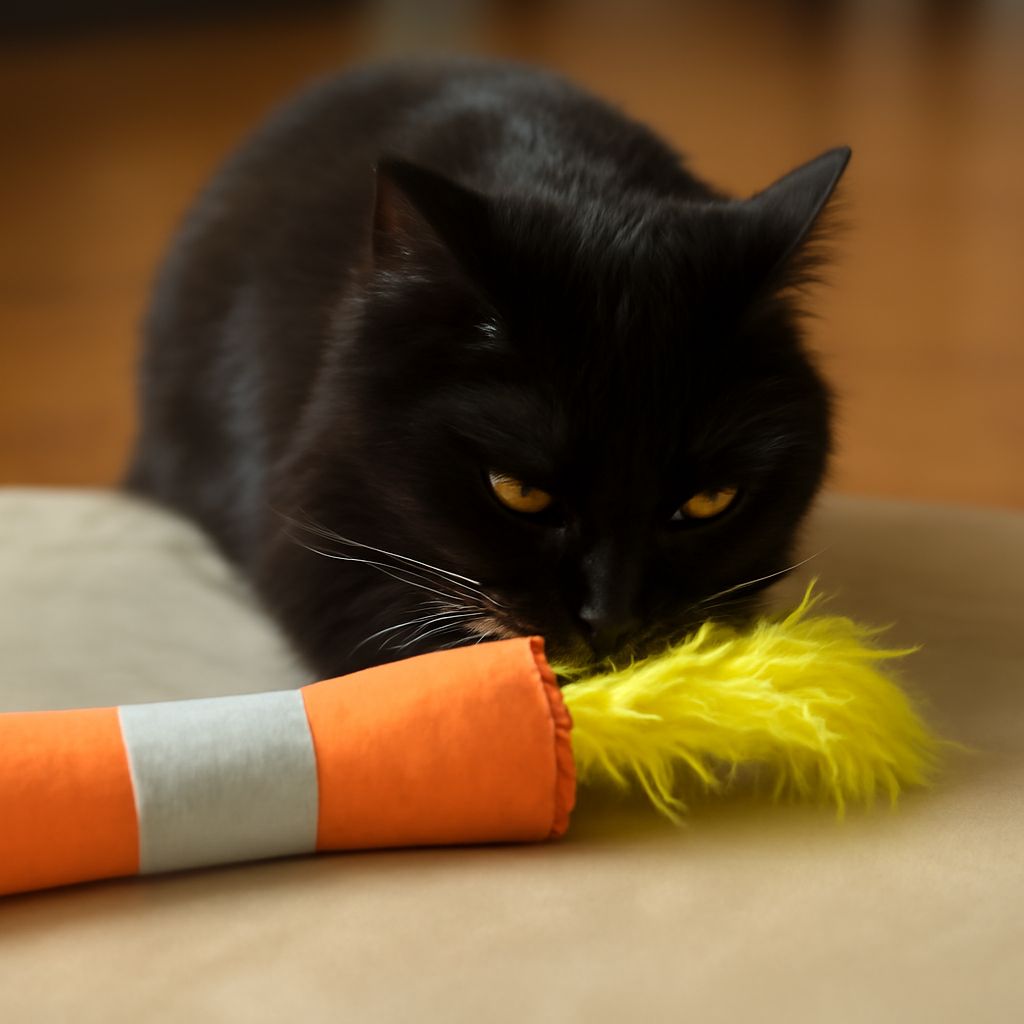

Which chew toy will your cat actually enjoy, and how can you tell whether it is safe? Start with a cat-sized toy made for chewing: it should be large enough that your pet cannot swallow it, soft enough to yield, and sturdy enough to stay in one piece. Watch the first few play sessions closely.
Chewing toys for kittens need the same attention, with a size and texture suited to a smaller mouth. Whether your companion is a tiny explorer or a grown-up couch supervisor, check the toy often and put it away when it starts to break down.
Why do cats chew?
Cats explore with their mouths, and some enjoy biting and kicking an object during play. Kittens may also seek something to mouth while their teeth are changing. One cat may carry a soft toy; another may ignore it.
Cat chew toys can give an interested pet an appropriate object to bite during supervised play. They do not replace interactive hunting games, scratching surfaces, or time with you. A sudden change in chewing, especially when paired with eating difficulties, deserves a closer look rather than a new toy alone.
Compare common toy types
Look at the construction of each individual item, including seams and attachments. Labels can guide you, but your cat’s strength and play style determine how well a toy holds up.
- Flexible rubber or silicone toys: A cat-specific design with some give can be easy to wipe clean. Choose a single-piece shape without narrow parts that could tear off. If your cat bites chunks out of it, take it away.
- Fabric or plush toys: These can be appealing to cats that like to grip and kick. Check seams for loose stitching and remove the toy if stuffing, threads, or a pouch inside becomes accessible. A fabric toy that is routinely shredded is a poor fit for that cat.
- Textured dental toys: Some have ridges or a textured surface intended for mouthing. Check that the texture is part of a secure, flexible toy rather than a set of detachable pieces. Stop using it if the surface cracks or the cat seems uncomfortable.
- Catnip-filled toys: Scent can encourage play, although not every cat responds to catnip. Select a securely sewn toy and inspect it after play; the filling should stay inside. If excitement leads to rough biting and torn fabric, choose a sturdier option.
You may see sticks, bones, or very hard chews sold for pets. Hard objects can fracture teeth, so leave these on the shelf. VCA Animal Hospitals notes that chewing hard objects can cause tooth fractures in cats.
Kitten chew toys: choose for a growing mouth
A young kitten needs a toy it can grip and mouth comfortably without being able to swallow the whole thing. Compare the actual toy with your kitten, not just the photo on the package. It should be too large to fit entirely in the mouth and free of detachable eyes, bells, ribbons, and other small pieces.
For a first choice, try a soft, flexible toy labeled for kittens and suitable for chewing. Offer it while you are nearby, then check for punctures, loose parts, and fraying. Kitten chew toys can become too small or worn as your pet grows, so reassess the fit regularly. If a kitten tears pieces off, remove the toy and ask your veterinarian about safer alternatives.
Chew toys for a kitten can be introduced during a short play session, when your pet is awake and interested. Let the kitten approach and investigate. A gentle movement across the floor may invite a pounce; there is no need to put the toy in its mouth. End the session before it becomes overexcited, and store the toy out of reach until the next one.
Size, material, and construction: a quick check
Before buying toys for a cat to chew, handle the item if possible and read the care and age guidance. Use these checks together:
- Size: The whole toy should be too large to swallow, with no small component that can be bitten free. Avoid long, thin parts that could reach deep into the mouth.
- Flexibility: Look for a material with some give. Avoid rigid objects that resist bending; they can damage teeth.
- Construction: Pull gently at seams and attachments. Skip items with loose pieces, exposed stuffing, or easily unraveled fibers.
- Intended use: Choose products described as suitable for cats and for chewing. A toy made for a large dog may be too hard or awkward for a small feline mouth.
- Your cat’s habits: If your pet swallows fabric or bites pieces off toys, avoid those materials and consult your vet. Even a well-made toy can become unsafe when damaged.
String, yarn, elastic, and ribbon are especially risky if swallowed. VCA’s play guidance recommends keeping string toys for supervised play because cats can become tangled or ingest them. Put wand toys away after the game, where curious paws cannot retrieve them.
Keep playtime clean and supervised
Wash reusable cat chew toys according to the manufacturer’s directions. Some solid toys can be washed with mild dish soap and warm water, rinsed thoroughly, and dried; fabric items may have different instructions. Skip heavily scented cleaners, and replace a toy that cannot be cleaned after it becomes soiled.
Before each session, look for splits, sharp edges, loose seams, and missing pieces. Take damaged items away promptly. Rotate a few suitable toys so you can inspect and clean them between uses. Supervision matters even with a new item: cats can surprise you with the speed at which they find a weak seam.
Keep kitten chew toys separate from toys with strings or small attachments, and choose a quiet place to play. If another pet tries to take the toy, give each animal its own space. This also lets you see whether your kitten is gently mouthing the item or trying to eat it.
When chewing needs a vet’s attention
Call your veterinarian if chewing changes suddenly, your cat drops food, favors one side of the mouth, drools, has bad breath, or avoids a favorite toy. These can be signs of mouth pain. A vet can examine the teeth and gums and recommend care. A chew toy is not a substitute for brushing or professional dental treatment.
If your cat regularly eats fabric, plastic, or other nonfood objects, tell your vet what was swallowed and when. This behavior, called pica, can lead to an intestinal obstruction. If you suspect a toy piece or string was swallowed, contact a veterinarian promptly; vomiting, weakness, or loss of appetite needs urgent assessment. Never pull visible string from the mouth or rear end.
Choose cat chew toys your individual cat can mouth comfortably without tearing off pieces, and retire any toy as soon as that changes.