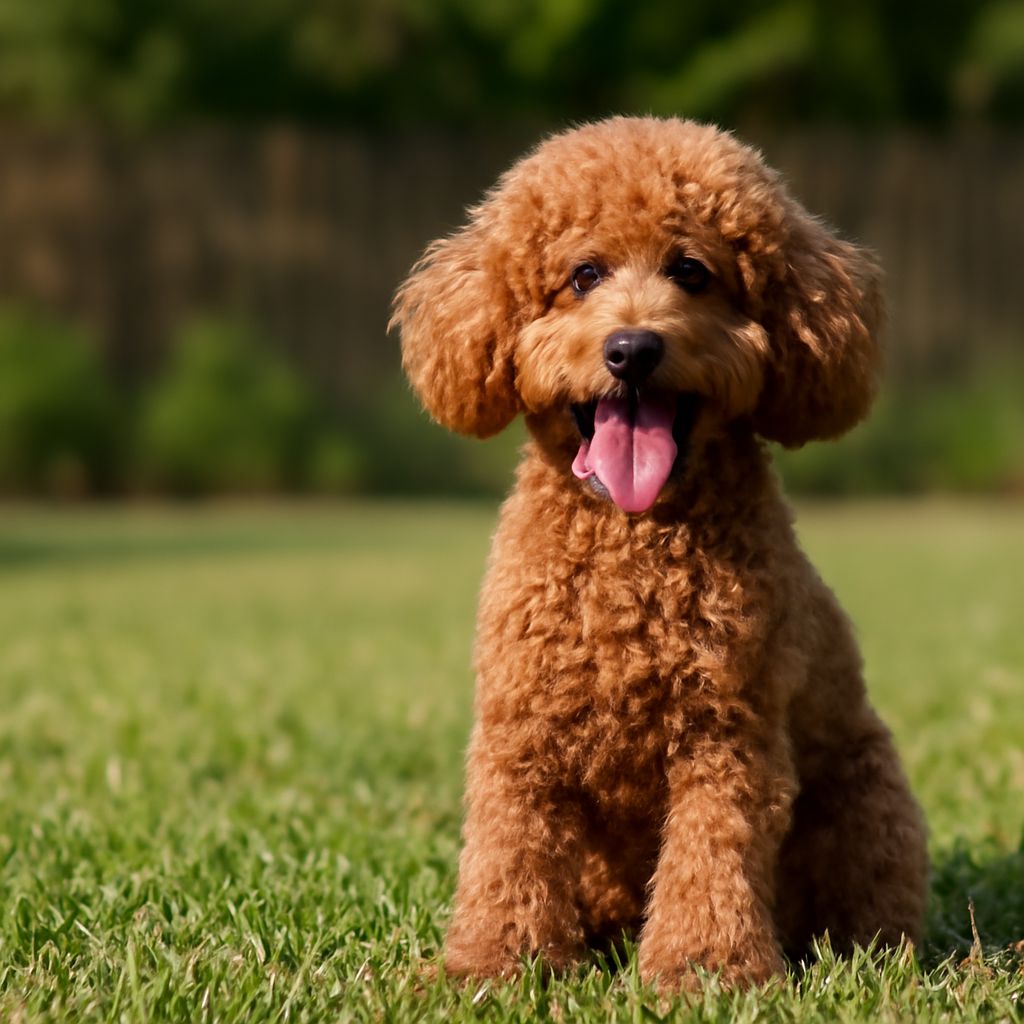

You’ve found a curly-faced puppy online, and now you’re wondering whether that little bundle will fit comfortably in your apartment, car, and daily routine. Comparing the sizes of these poodles can help you plan, but first it helps to know how the various poodle types are measured—and what a puppy photo can’t tell you.
Different Types of Poodles: The Three Recognized Varieties
In the United States, the American Kennel Club recognizes Toy, Miniature, and Standard as three varieties of the Poodle. They share a breed standard, with height distinguishing the varieties. The AKC standard measures height at the highest point of the shoulders, often called the withers.
These are different types of poodles within one breed, so think of size as one part of your decision. An individual dog’s temperament, history, health, and training matter when you’re choosing a companion. A tiny dog can be energetic, and a larger one may enjoy a quiet evening after a satisfying walk.
Compare adults at a glance
The poodle size chart below brings together the AKC height boundaries and the organization’s approximate adult weights. Height determines the variety under the standard; weight is a general guide and can vary with build, sex, health, and individual growth.
| Variety | Adult height at the withers | Approximate adult weight |
|---|---|---|
| Toy | 10 inches or less | 4–6 pounds |
| Miniature | Over 10 inches through 15 inches | 10–15 pounds |
| Standard | Over 15 inches | About 40–50 pounds for females and 60–70 pounds for males |
The AKC weight chart gives these ranges as general references. A healthy dog can fall outside an estimate, so ask your veterinarian to assess body condition rather than trying to feed a dog toward a chart number. The standard does not set the weight ranges in this table as the boundaries between varieties.
The chart of poodle sizes gives you a quick reference, and the exact edges matter. A dog measuring 10 inches falls within the Toy height range; one just over 10 inches falls within the Miniature range. At exactly 15 inches, the height range is Miniature; above 15 inches, it is Standard. Measuring accurately is especially helpful when an adult is close to a boundary.
A poodle sizes chart can show the categories, but it can’t tell you how much floor space one particular dog occupies when stretched out after a walk. Measurements of the actual dog are more helpful for choosing a bed or crate than a label alone.
How to measure your dog
Stand your dog naturally on a firm, level floor, with all four feet under the body. Find the highest point of the shoulder blades at the base of the neck. Place a level ruler or flat object across that point, then measure straight down to the floor. Part or gently flatten fluffy coat so you’re measuring the dog, not the hairstyle.
A helper can offer a treat at nose height while you measure. Take the measurement more than once, especially if your dog shifts or is close to a cutoff. For a formal show measurement, follow the applicable event’s procedure; a home measurement is a practical estimate for everyday planning.
For equipment, take additional measurements. A harness depends on chest and neck circumference, while a crate must allow your dog to stand naturally, turn around, and lie down comfortably. Check the manufacturer’s measuring instructions and allow for the individual dog’s shape. Shoulder height alone won’t tell you whether a harness fits behind the front legs.
Puppy predictions and adult measurements
A puppy’s current height places the puppy at a point in its growth, not necessarily in its eventual adult variety. Ask a breeder about the parents’ measured heights and weights, the puppy’s growth so far, and the expected adult range. Parents and growth records provide context, but a prediction is still an estimate. Your veterinarian can help monitor growth and body condition as the puppy develops.
A photograph is even less precise: camera angle, coat volume, and the absence of a familiar object for scale can all make a dog appear larger or smaller. If you’re considering an adoption, request a current shoulder measurement and weight, the dog’s estimated age, and any known history. For a growing dog, ask what the organization expects and how it reached that estimate.
Names in advertisements can make the choices sound more complicated. “Teacup,” “tiny toy,” and “royal” are marketing descriptions, not additional AKC varieties. The Poodle Club of America identifies those labels as marketing terms. Ask for measurements and health information rather than relying on an appealing label.
What changes at home?
The sizes of poodles affect practical details. A Toy is easier for many adults to lift into a car, while a Standard needs more room to turn in a vehicle and may require more physical strength to guide on a leash. Before bringing either home, check where the dog will rest, how you’ll transport it, and whether you can manage the dog safely in an emergency.
Smaller dogs need thoughtful handling around young children and larger pets. Teach children to let the dog approach, supervise play, and give the dog a place to retreat. For a larger dog, plan enough clear space for comfortable movement and practice calm greetings so an enthusiastic welcome doesn’t knock someone over.
All poodle sizes need exercise, mental activity, training, and regular grooming. The amount of walking an individual enjoys depends on fitness, age, and health, not just the variety name. A smaller dog still needs a daily routine beyond being carried from room to room; a larger dog benefits from a schedule that gives it room to move and learn.
Choose for an ordinary day
Imagine the morning walk, the ride to the veterinarian, and where the dog will settle while you work. If you need a dog you can lift easily and can provide careful handling, a Toy or smaller Miniature may suit your household. If you have room in the car and enjoy managing a bigger companion on outings, a Standard may be appealing. Compare a particular dog’s measurements and personality with your real routine, and choose the companion whose needs you can meet consistently.