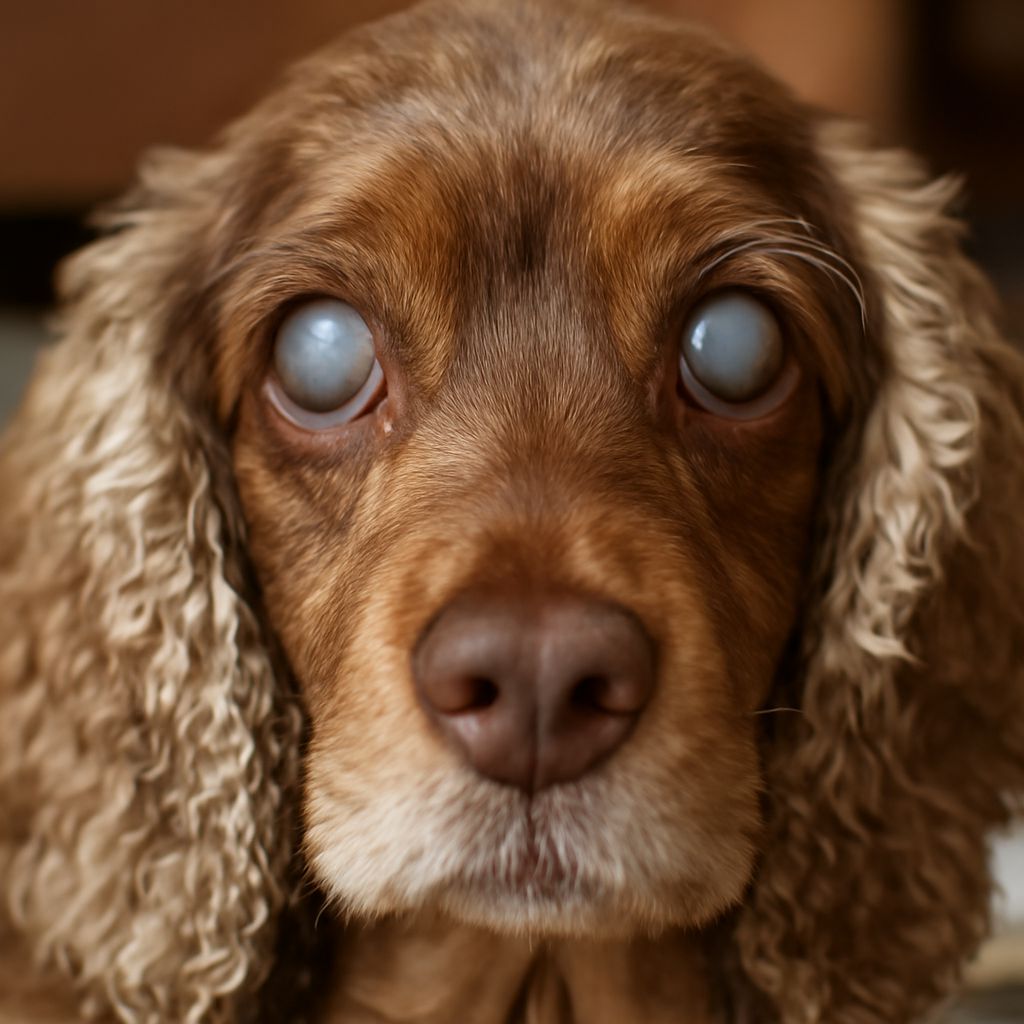

If your dog’s eyes look cloudy or their vision seems different, an eye exam can help you understand what is changing and what to do next. A cataract in a dog affects the lens inside the eye; other conditions can produce a similar cloudy appearance and call for different care.
Changes linked to canine cataracts may be subtle at first. Note when you first noticed them and arrange a veterinary visit. If the eye is suddenly red, painful or rapidly cloudier, or your dog suddenly seems unable to see, contact a veterinarian urgently for advice on when and where to be seen.
Dog cataracts and other causes of cloudy eyes
A healthy lens sits behind the pupil and focuses light on the retina at the back of the eye. A cataract is an opacity in that lens. A small opacity may leave vision largely intact, while a cataract covering the whole lens can seriously interfere with sight. Cataracts in dogs can affect one or both eyes and may progress at different rates. The effect of cataracts in dogs depends in part on how much of each lens is cloudy.
An older dog may instead have nuclear sclerosis, an age-related increase in lens density that can give the pupils a bluish haze. It generally does not cause significant visual impairment. Cloudiness can also arise on the cornea, the clear surface at the front of the eye. A veterinarian can examine where the change is and distinguish these conditions; a photograph or the color alone cannot establish the cause. The American College of Veterinary Ophthalmologists explains how a lens examination helps tell cataracts and nuclear sclerosis apart.
What changes might you notice?
With dog cataracts, early signs can include a small cloudy area in the pupil or hesitation in unfamiliar surroundings. Your dog may have trouble finding a toy, miss a step, bump into furniture or become less confident in dim light. Some dogs compensate well in familiar rooms, so a change may be easier to see on a new route or after furniture has moved.
Early signs of cataracts in dogs can be difficult to separate from other causes of vision loss. These observations are clues to share, not a way to measure vision at home. Other eye or neurological problems can cause similar behavior. A dog with early cataracts may show no obvious difficulty, particularly if only a small part of the lens is affected. Note whether the change involves one eye or both and whether it appeared over days or months.
Pain is an especially important distinction. A cataract itself may not be visibly painful, but inflammation or another eye condition can make the eye red, cause squinting or lead your dog to rub at it. Contact your veterinarian promptly about those signs. Sudden vision loss or a painful, cloudy eye warrants urgent attention because some eye problems can threaten sight quickly.
Why can a dog develop a cataract?
Can dogs get cataracts when they are young? Yes. Some inherit a tendency to develop them, and cataracts can also be present at birth. Others appear later in life. Age alone does not identify the cause or predict how quickly the opacity will change.
Diabetes is another important cause: diabetic dogs can develop cataracts rapidly. Dog cataracts associated with diabetes can change over a short period, so tell your vet promptly if you notice new cloudiness. Increased thirst and urination, weight loss or changes in appetite are worth reporting to your veterinarian. Inflammation within the eye and injury can also contribute. Sometimes the precise cause of a dog’s cataract remains uncertain after an examination.
Owners often wonder whether dogs can develop cataracts in only one eye. They can, although the other eye may also need monitoring. If your dog has had an eye injury, a previous diagnosis or a change in medication, bring those details to the appointment.
How the veterinarian checks the eyes
Your veterinarian will ask about the timing of the cloudiness and any changes in behavior, then examine the eyes and assess vision. The examination may include dilating the pupils to see the lenses more clearly. Depending on the findings, the vet may measure eye pressure, look for inflammation and recommend blood or urine tests, including testing for diabetes when appropriate.
For a closer assessment, your vet may refer you to a veterinary ophthalmologist. If your dog has cataracts and surgery is being considered, the specialist may recommend an ultrasound to examine structures behind a cloudy lens and an electroretinogram to assess retinal function. These tests help determine whether removing the opacity is likely to help and whether other eye disease needs attention.
Treatment and daily care
Management depends on the eye’s health, your dog’s general health and the effect on sight. Some dog cataracts are monitored with scheduled examinations, particularly when vision remains functional. A cataract in a dog may progress, so ask your veterinarian what changes should prompt an earlier return, and follow the recommended schedule even if your dog seems comfortable.
For suitable candidates, surgery removes the cloudy lens material, often using a technique called phacoemulsification; an artificial lens may be placed. The decision also takes into account retinal health, inflammation, anesthesia and the care needed afterward. Surgery can restore useful vision, but the outcome depends on the individual eye. Discuss the expected benefit, possible complications, costs, medications and follow-up visits with the specialist.
There is no proven eye drop that reverses a cataract. A veterinarian may prescribe medication to control inflammation or treat another condition, so use drops for the purpose and duration prescribed. When discussing cataracts, dog owners should tell the vet about all products already being used in or around the eyes.
Dogs can also get cataracts alongside other eye conditions; the examination helps establish what care each eye needs. At home, keep furniture and food and water bowls in predictable places. Block access to unguarded stairs, use a leash in unfamiliar areas and speak before touching or approaching your dog. These adjustments can help a dog with reduced vision navigate safely while you work with the veterinary team on the underlying condition.
Prepare for the appointment
Bring a short record of when the cloudiness began, which eye changed and whether your dog’s confidence, thirst or bathroom habits have changed. A dated photo may help show the sequence. Ask: Where is the cloudiness? Is there inflammation or another condition affecting sight? Should we see an ophthalmologist, and when should the eyes be checked again?