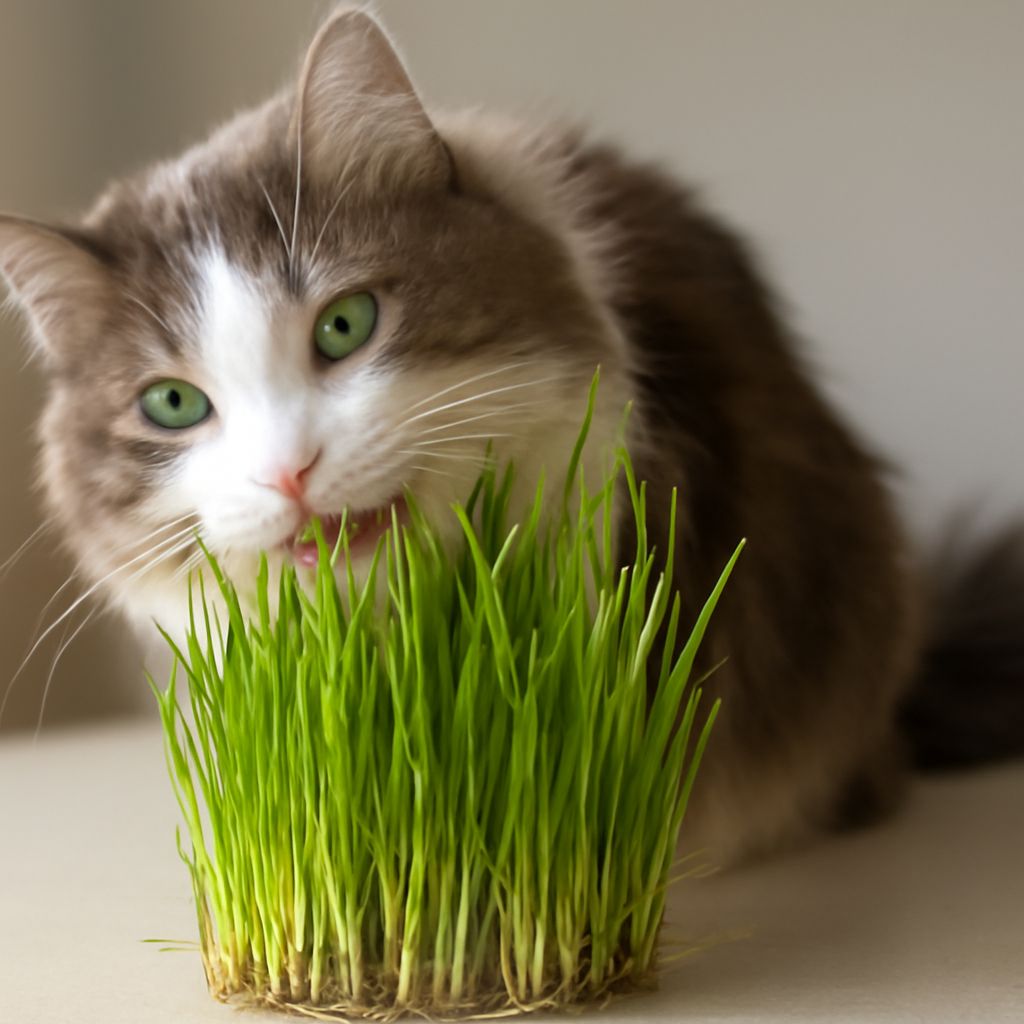

Your cat has just nibbled a blade from a pot on the windowsill. Is grass safe for cats to eat? A little untreated, correctly identified grass is generally tolerated, but first make sure the plant really is grass and that it has not been exposed to chemicals.
A cat nibbling grass may simply be exploring, while repeated vomiting, a sudden change in behavior, or a possible toxic plant exposure calls for veterinary advice. If you cannot identify the plant, move it out of reach while you find out what it is.
Cat eating grass: what the behavior may mean
So, do cats eat grass even when they seem well? Yes. Some healthy cats nibble it, and others show little interest. A UC Davis feline care guide describes the behavior as relatively normal while noting that its function is not understood.
There are several ideas about why cats eat grass, including that the texture is interesting or that plant material has some digestive role. Researchers have not established one explanation for every cat. You cannot tell from a nibble alone whether your pet has an upset stomach, needs more fiber, or is seeking a particular nutrient.
Some cats vomit after eating greenery, but many do not. Grass should not be offered as a way to make a cat vomit or treat hairballs. If vomiting keeps happening, ask a veterinarian to investigate instead of adding more greenery to the menu.
Is grass itself safe?
Can cats eat grass from a lawn? The plant may be only part of the question. Outdoor grass can carry pesticide or herbicide residue, fertilizer, parasites, or contamination from other animals. Lawn treatments may be present even when you cannot see or smell them. Keep your cat away from treated or unknown areas, and follow product instructions and veterinary advice after any suspected exposure.
Long, stiff blades can also cause irritation or get caught. Watch for gagging, repeated swallowing, nasal discharge, or persistent sneezing after a nibble. Contact your vet if these signs appear, and avoid trying to pull a blade from deep inside the mouth or nose.
If your cat eats grass occasionally and remains comfortable, you can note what was eaten and keep an eye on normal appetite and behavior. A cat eating grass suddenly or in unusually large amounts, however, deserves a discussion with your vet, especially if the change comes with other symptoms.
Can you offer wheatgrass?
Can cats eat wheatgrass? Young wheat shoots are commonly offered as cat grass. Choose plain, correctly identified wheatgrass grown without pesticides, herbicides, or added fertilizer, and offer a small amount under supervision. Give your cat access to its regular complete diet and fresh water; the shoots are an extra, not a meal.
You may find wheatgrass for cats sold as a growing kit or a small pot. Check the label for the plant species and growing instructions, and choose untreated seed intended for sprouting. Avoid mixed pots with unidentified plants. If the seller cannot tell you what is growing in the container or what has been applied to it, choose another product.
When offering wheatgrass, cats may nibble a few blades, investigate and leave, or ignore the pot entirely. All three responses are fine. Start with brief supervised access, then remove the pot if your cat tries to swallow a large mouthful, digs in the soil, or knocks it over. A heavy, stable container placed on an easy-to-clean surface can help prevent spills.
For wheat grass for cats grown at home, use clean water and a clean container. Follow the seed supplier’s directions, and discard the crop if it becomes moldy or starts to smell unpleasant. Keep loose seeds and growing materials away from your pet. Trim or replace overgrown shoots rather than letting a tangled pot become a chew challenge.
A small pot of wheat shoots for your cat is one option for a pet that enjoys greenery. You do not need to persuade a cat that ignores it. If grass makes your cat repeatedly retch or vomit, remove it and call your vet for advice.
Grass is not the same as every green plant
A long, narrow leaf does not make a houseplant safe. Some plants look grassy but belong to entirely different groups. Identify each plant by its scientific name and check it against the ASPCA’s cat plant list; common names can refer to more than one species.
True lilies and daylilies are especially dangerous to cats. According to the ASPCA, exposure to these plants can cause severe kidney damage. Keep them out of a cat’s home, including bouquets: pollen and vase water are hazards too.
If you suspect your cat has contacted a lily or eaten an unknown or toxic plant, call your veterinarian or an emergency veterinary clinic immediately. Do not wait for symptoms or induce vomiting unless a veterinarian instructs you. Bring a photo or sample of the plant and its packaging if you can do so safely; identification helps the veterinary team decide what to do.
When to call the vet
A cat that eats grass now and then may not need treatment, but the surrounding signs matter. Contact your vet if you notice:
- Repeated vomiting, diarrhea, gagging, or difficulty swallowing.
- Reduced appetite, unusual tiredness, hiding, or a change in normal behavior.
- A new, persistent urge to eat grass or other nonfood material.
- Sneezing or nasal discharge after chewing a blade.
- Any suspected contact with a treated lawn or an unknown plant.
If your cat has trouble breathing, collapses, or may have encountered a lily, seek emergency veterinary help immediately. Tell the clinic what was eaten, roughly when, and any signs you have seen. Take the product label or a plant photograph with you if available.
A complete, balanced cat food should provide the nutrients your pet needs; eating grass does not establish a deficiency. Your vet can help assess diet and investigate a persistent change. Cats can chew grass for reasons that remain uncertain, so observe the whole animal rather than interpreting one blade as a diagnosis.
Right now, identify the plants your cat can reach and move any unknown or toxic ones out of reach until you have checked them.