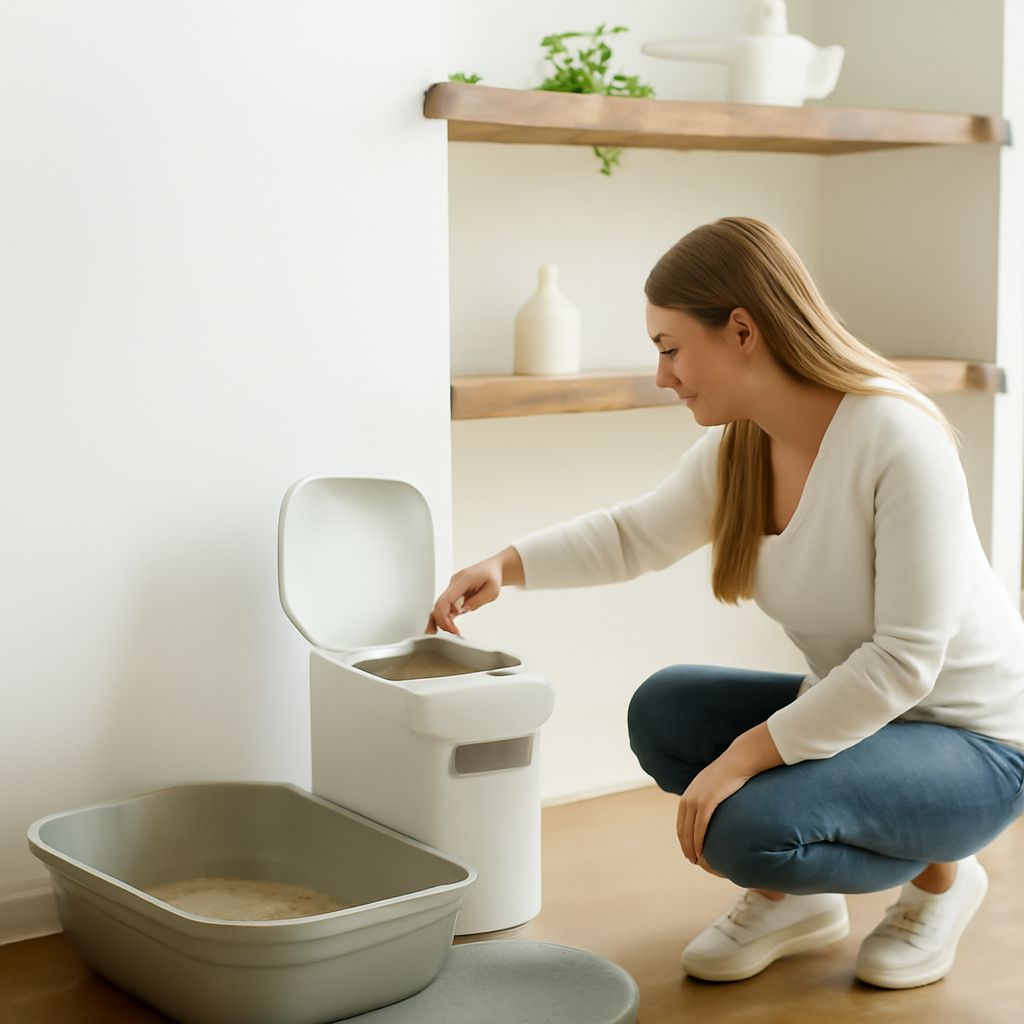

You can keep litter-box cleanup simple and protect your plumbing by choosing a disposal method that fits your home and local rules. A cat litter labeled as flushable may seem convenient, but the best litter to flush is still subject to those limits. When in doubt, bagging used litter for the trash is a practical choice.
What Does the Label Mean?
A package of flushable cat litter tells you that its maker intends the product to be flushed under specified conditions. Read the full directions, not just the front of the bag: they may describe how much to dispose of at once or ask you to wait before flushing. Those directions describe the product; they cannot tell you the condition of your pipes or override your wastewater provider’s guidance.
Litter marketed for flushing can be made from materials such as plant fibers or other absorbent ingredients. Materials differ in texture, clumping, dust, and how your cat responds to them. Even highly rated cat litter marketed for flushing may behave differently from another formula in water. It also does not mean a local sewer system accepts it or that the used contents of the box are harmless to waterways.
The distinction matters because used litter includes cat waste. A material that breaks apart in water can still carry waste into the wastewater system, and material that passes through a toilet can cause trouble farther along the pipes. The toilet is a surprisingly poor place to conduct a plumbing experiment.
Best Flushable Cat Litter: Compare the Whole Situation
The best flushable cat litter for your household is one your cat will use comfortably and that you can dispose of in a way your home and community accept. Even the best litter labeled flushable for your cat belongs in the trash if your local utility says to discard all litter there. You can still choose the product for its texture or odor control and discard it in a bag.
When comparing brands of flushable litter, look at the complete label and ask yourself:
- Will my cat use it? Choose a texture your cat accepts; introduce a new product gradually rather than abruptly replacing a familiar one.
- What are the disposal directions? Find the instructions for used litter, not just claims about the unused material.
- What does my wastewater provider say? Search its guidance for both cat litter and pet waste, or call if its instructions are unclear.
- What kind of system serves my home? A private septic system and a public sewer have different operators and maintenance considerations.
- Can I store and handle it comfortably? Consider dust, scent, package size, and whether someone in the household can carry the bag.
The top litter for flushing in an advertisement may be a poor match for a cat who dislikes its texture. A box that your cat avoids is a problem even if the product looks convenient on the shelf. Keep the box clean and observe your cat during a change; if avoidance continues or your cat strains to urinate, contact a veterinarian.
Check Your Sewer or Septic System
If your home has a septic system, put used litter in the trash. The U.S. Environmental Protection Agency lists cat litter among the materials that should never be flushed into a septic system. Solids entering the system can interfere with its operation, so a flushable claim on a bag does not change that guidance.
On a public sewer, check the utility’s current instructions for your address. Rules and recommendations differ by location. For example, the City of Riverside, California says even litter labeled flushable can clog pipes and directs residents to dispose of it in the trash. A building manager or landlord may also have rules for shared plumbing.
Do not treat silence on a package as permission from your utility. If you cannot find clear local guidance, use the trash while you ask. A product sold as cat litter you can flush does not tell you whether your building has older pipes, a history of blockages, or a shared line that needs extra care. Your water or sewer provider can explain its requirements; a landlord can clarify building rules.
Put Used Litter in the Trash
Even when you buy flushable cat litter, a bag-and-bin routine is straightforward. Keep a scoop and a supply of bags near the box so that cleanup takes a few moments instead of becoming an archaeological project.
- Scoop feces and urine clumps into a sturdy bag. If it leaks or tears, place that bag inside another.
- Tie or seal the bag securely and put it in your household garbage according to local collection rules. Keep it out of recycling and check before using any organics collection; many programs do not accept pet waste.
- Empty and clean the box as needed, following the litter maker’s directions. Put discarded litter in a sealed bag as well.
- Wash your hands with soap and water after handling the box or waste. Store the scoop where it cannot contact food-preparation surfaces.
The CDC recommends changing the litter box daily to reduce exposure to Toxoplasma. It also recommends that pregnant or immunocompromised people have someone else change the litter when possible; if they must do it themselves, wear disposable gloves and wash hands afterward. Keep children away from used litter and the cleaning supplies.
Choose a Routine You Can Maintain
Among flushable cat litter brands, compare the instructions on the specific bag you plan to buy. When brands of cat litter sold for flushing change a formula or directions, check the new package. A litter advertised as suitable for flushing is still a product your cat must accept and your household must handle every day.
The best flushable option for a cat may be unscented and soft underfoot; for another, a familiar clumping texture may matter more. Add a little of the new litter to the old over several days, watching whether your cat continues to use the box. If your cat objects, slow the transition or return to the familiar material.
Choose a disposal method in this order: follow your local wastewater and garbage guidance, account for your home’s plumbing, then consider the package instructions. With septic service, or when your utility says litter belongs in the garbage, seal used litter in a bag and put it in the trash. That routine works just as well for a litter marketed as flushable and leaves one less question at cleanup time.